
There is no item in your cart
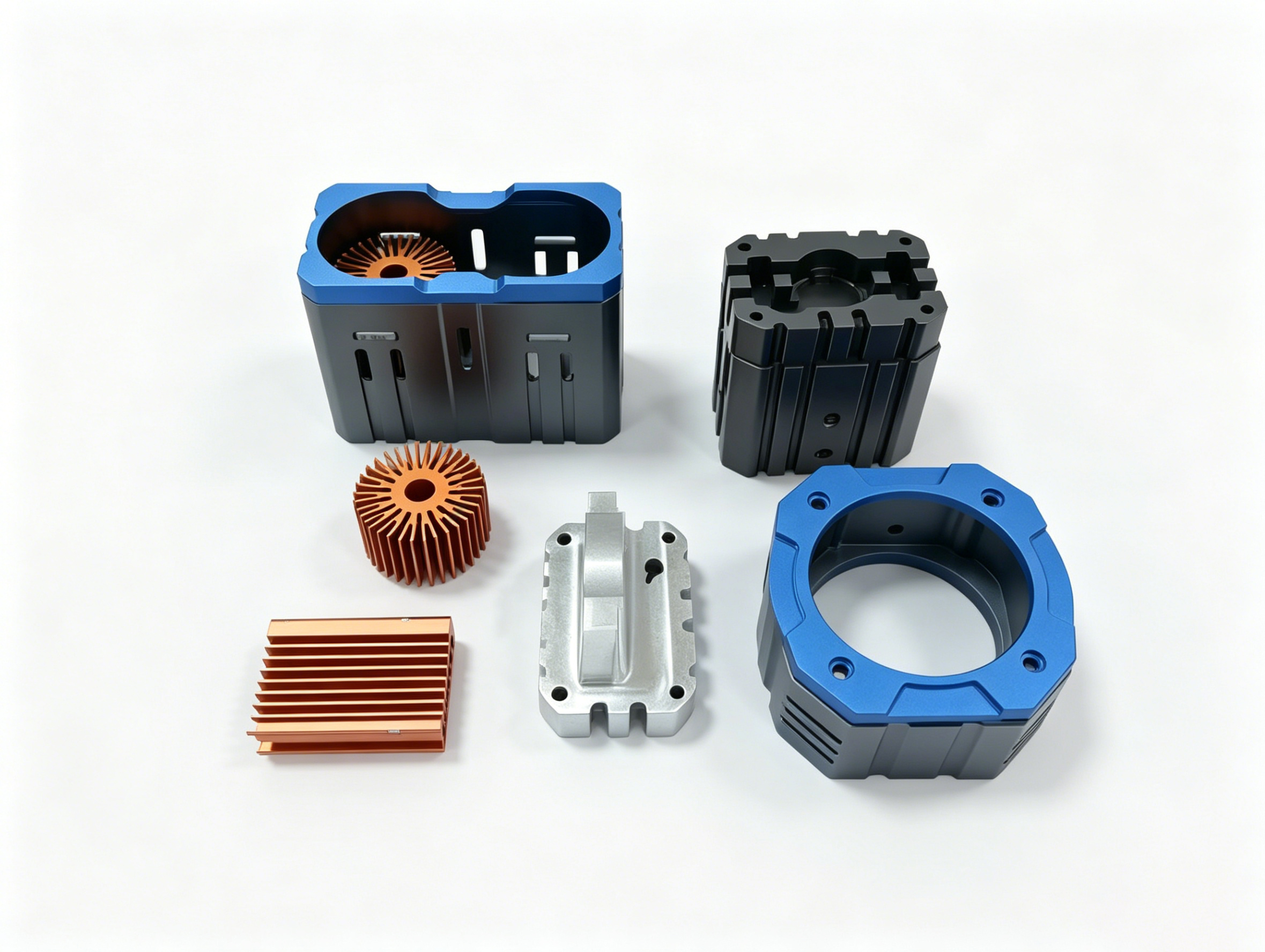
How CNC Machining Enhances Precision in Custom Aluminum Parts for New Energy Applications
In today’s fast-growing new energy industry, precision engineering has become a critical driver of performance, efficiency, and safety. From electric vehicles (EVs) to battery energy storage systems (BESS) and power electronics, manufacturers rely heavily on precision CNC machining services to produce high-performance aluminum components.
As global demand rises for custom CNC aluminum parts, advanced manufacturing technologies are enabling companies to meet tighter tolerances, improve thermal management, and reduce production costs.
Why CNC Machining Is Essential for the New Energy Industry
The new energy sector—including electric mobility, renewable energy systems, and battery storage—requires components that can withstand:
- High thermal loads
- Continuous vibration
- Lightweight structural requirements
- Long-term operational stability
This is why CNC machining aluminum parts has become the preferred solution for OEMs and engineering companies worldwide.
For example, electric vehicle platforms such as Tesla Model 3 require extremely precise battery enclosure systems, cooling plates, and structural brackets to ensure safety and efficiency.
CNC Machining and Ultra-Precision Manufacturing
Modern precision CNC machining services provide unmatched accuracy and repeatability for aluminum components.
Key Benefits of CNC Aluminum Machining:
1. High Precision Tolerance Control (±0.005mm)
Advanced CNC systems ensure ultra-tight tolerances, which are critical for:
- EV battery housings
- Aluminum heat sinks
- Motor mounts
- Power inverter cases
2. Complex Geometry Machining (5-Axis CNC)
With 5-axis CNC machining, manufacturers can produce:
- Lightweight structural parts
- Internal cooling channels
- Complex EV battery structures
- High-performance heat dissipation components
This capability is essential for custom aluminum CNC parts manufacturing in new energy systems.
3. Superior Material Performance with Aluminum Alloys
Common materials used in CNC machining aluminum parts include:
- 6061 aluminum alloy
- 6063 aluminum extrusion
- 7075 aerospace aluminum
- 5052 corrosion-resistant aluminum
These materials offer excellent:
- Strength-to-weight ratio
- Thermal conductivity
- Corrosion resistance
- Machinability
Applications of CNC Aluminum Parts in New Energy Systems
Electric Vehicle (EV) Industry
The EV sector is one of the largest drivers of demand for precision CNC aluminum components, including:
- EV battery enclosure systems
- Thermal management plates
- Motor housings
- Lightweight structural frames
These components directly impact vehicle range, safety, and thermal efficiency.
Battery Energy Storage Systems (BESS)
In renewable energy storage, CNC-machined aluminum parts are widely used for:
- Battery module frames
- Cooling systems
- Electrical insulation housings
- Structural support brackets
These systems require high consistency and reliability for long-term operation.
Power Electronics & Inverters
High-power electronics generate significant heat, making CNC aluminum heat sink manufacturing essential for:
- Efficient heat dissipation
- Stable system performance
- Extended equipment lifespan
Surface Finishing for Performance Enhancement
In custom CNC aluminum manufacturing, surface treatment plays a critical role in durability and performance.
Common finishing processes include:
- Anodizing aluminum CNC parts for corrosion resistance
- Hard anodizing for wear resistance
- Sandblasting for uniform texture
- Brushing and polishing for premium appearance
These processes are widely used in industrial CNC machining services for new energy applications.
Quality Control in Precision CNC Manufacturing
To meet international OEM standards, every component undergoes strict inspection procedures:
- CMM (Coordinate Measuring Machine) inspection
- 2.5D optical measurement systems
- Thread gauge and pin gauge testing
- Surface roughness analysis
This ensures consistent quality in high-precision CNC machining production.
Why CNC Machining Supports the Future of Clean Energy
As the world transitions toward electrification and renewable energy, the demand for custom CNC machining services for EV and energy storage continues to grow rapidly.
CNC technology enables:
- Faster prototyping for EV development
- Scalable mass production
- High-performance aluminum part customization
- Cost-efficient precision manufacturing
From electric vehicles to solar energy systems and battery storage, CNC machining is a foundational technology driving innovation.
Conclusion
CNC machining aluminum parts plays a vital role in the success of the new energy industry. Its ability to deliver high precision, complex geometries, and consistent quality makes it indispensable for EV manufacturers, battery system developers, and power electronics companies.
As global demand for precision CNC machining services continues to grow, advanced aluminum manufacturing will remain at the core of sustainable energy innovation.
Leave A Comment